Author Archives: Meg Davis, Ph.D.

Detention of Cheng Yuan: Background & update

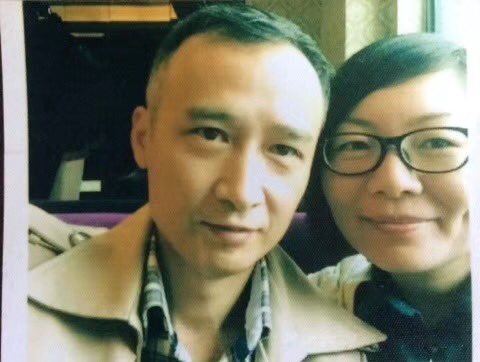
SML and CY

Cheng Yuan and Shi Minglei

No response yet from China or UNAIDS to the letter signed by 200 individuals and organizations nearly 3 weeks ago about Chinese anti-discrimination activist Cheng Yuan and his two colleagues, the Changsha Three.

Here’s an overview to his impressive career and an update on retaliation against his wife and brother, who have raised public concerns about his detention. I’ve met Cheng Yuan in China, and know him personally as a quiet, sober civil rights activist; not someone who goes to international meetings or works with international organizations much, just a local rights lawyer who put his head down, tirelessly filing case after case on behalf of China’s most marginalized people. [A huge thank you to fellow volunteers Gisa Dang, Lu Jun, and Yang Zhanqing, who contributed research and links.] Continue reading

Hundreds sign letter to call on China to free Changsha 3

Red_ribbonOver 200 individuals and organizations signed an urgent appeal letter calling on China to release the Changsha Three: Cheng Yuan, Liu Yongze, and Xiao Wu of Chinese organization Changsha Funeng. The final letter with signatures is here: Changsha Three Open Letter 30 July 2019
The Chinese translation is here (中文版): 联名信中文版 Continue reading

End HIV discrimination: Free the Changsha Three

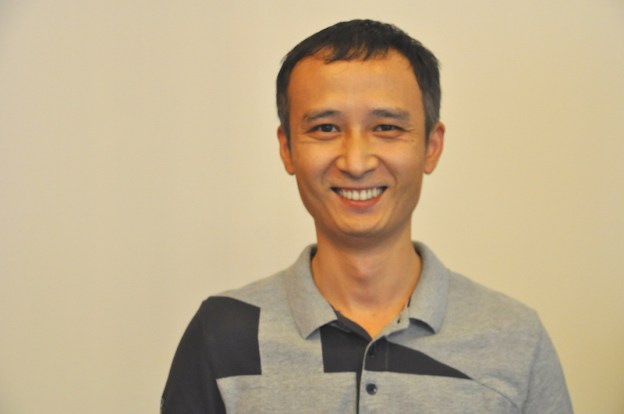
On July 22nd, after he visited Hong Kong for personal and organizational business, Chinese state security detained health rights advocate Cheng Yuan (photo right) and his two colleagues from NGO Changsha Funeng, Liu Yongze (photo left) and Xiao Wu. Cheng Yuan’s wife, Shi Minglei, has nothing to do with his NGO, but she was also detained and interrogated, and placed under residential surveillance under suspicion of subverting state power.

An open letter calling on China to release the Changsha Three is online here

Continue reading

The Uncounted: Video interview

Screen Shot 2019-07-10 at 6.50.48 PMIn 2017 I was honored to be one of three recipients of the International Geneva Award from the Swiss Network for International Studies (SNIS). Here’s a 4-minute video interview about that work, now transmogrifying into part of my forthcoming book, The Uncounted: Politics of Data in Global Health. Many thanks to Ruxandra Stoicescu and the SNIS team.

The Global Fund, Governance and Public Health

globalhealthwebinar_0Last month I got to join this great online webinar, “The Global Fund, Governance and Public Health”, with AIDS-activist-turned-prof Matt Kavanagh (Georgetown University’s O’Neill Institute) and Dr. Eric Goosby (UCSF, currently UN Special Envoy on TB and former head of the US President’s Emergency Plan for AIDS Relief, or PEPFAR), moderated by Philip Landrigan (Boston College).
Matt shared his recent study on the impact of the Global Fund on good governance in countries, Dr. Goosby and I shared comments, and we had a rich, focused discussion with some good audience questions. In hindsight, I only wish that I had spoken slower 🙂

Listen to the recording, and see the slides, here.


Reach the Last Mile First: High-Level Panel on Universal Health Coverage

DrTedros-768x512

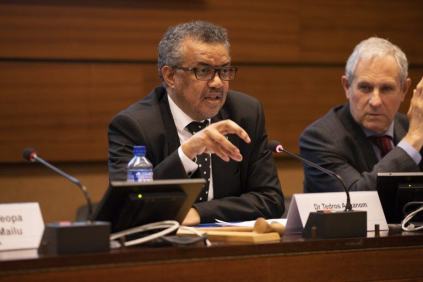
Dr. Tedros Adhanom Ghebreyesus (WHO) and Ambassador François Rivasseau (France). Photo: The Global Fund

Meg Davis and David Ruiz Villafranca

This blog appeared on Health and Human Rights.

In exploring what can be learned from the experience of the Global Fund to Fight AIDS, TB and Malaria in the shift towards Universal Health Coverage (UHC), speakers on a recent high-level panel in Geneva pointed to three key lessons: the importance of embracing health as a human right; the role of the Global Fund’s investments in building stronger health and community systems and in advocating for the rights of key populations, women and girls; and the central role played by communities in advocating for their rights and in planning, implementing and evaluating the HIV response.

Continue reading

Donors Risk Human Rights Violations When Leaving Middle-Income Countries

Do health aid donors transitioning out of middle-income countries have any obligations under human rights law?

In February, the Office of the High Commissioner for Human Rights (OHCHR) and UNAIDS held a consultation on human rights in the HIV response. I worked with the Free Space Process and PITCH (Partnership to Inspire, Transform and Connect the HIV Response), which together represent dozens of national and regional key populations networks and HIV NGOs, on a submission addressing just this point. Working with Russian lawyer Mikhail Golichenko, we argued that donors that transition abruptly may risk violating human rights standards—here’s why.

Read the full blog at Health and Human Rights Journal