Category Archives: Human rights impact

AIDS 2018: Award to Allan Maleche, a “tireless crusader”

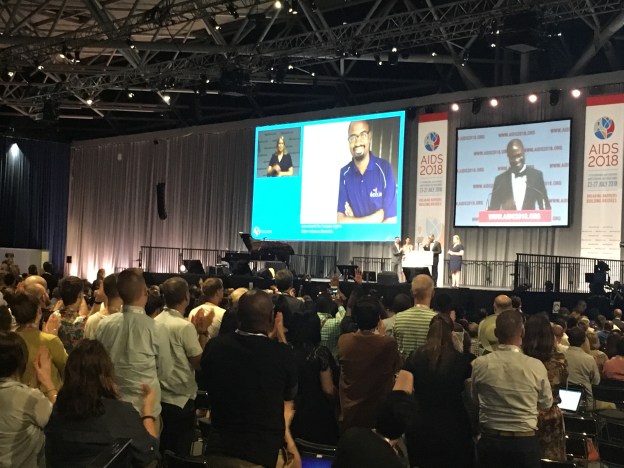
IMG_4652

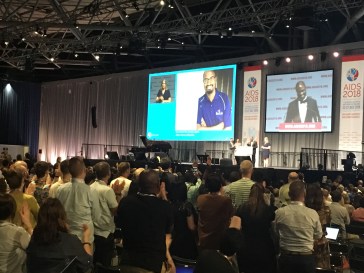
Standing ovation for Allan Maleche, winner of the Elizabeth Taylor Human Rights Award.

The second of a series of four articles for Health and Human Rights on the 2018 International AIDS Conference

*

July 23, 2018

AIDS 2018 is honoring human rights advocates and acknowledging their work is becoming ever more challenging in many countries. At the opening ceremony, the Elizabeth Taylor award went to Kenyan rights advocate Allan Maleche, executive director of KELIN. He won the award for KELIN’s successful litigation for the rights of people living with HIV and TB in Kenya.

In accepting the award, Maleche said, “There are many days when the challenges we face in Kenya and globally can seem endless. Human rights are never really secure—they must be fought for every day. Even with the advancements in science in the HIV world, the stigma and human rights violations remain the same.”

He said the award would be a huge boost to his organization to continue their work serving affected communities in Kenya.

“The story of HIV is a story of social justice and human rights,” said Quinn Tivey, grandson of Dame Elizabeth Taylor who took up AIDS activism in the 1980s, founding organizations and foundations in outrage over the treatment of her friends and colleagues. International AIDS Society (IAS) president Linda-Gail Bekker called Maleche a “tireless crusader” for the rights of people living with HIV and affected by TB, noting that KELIN had “used the law as a powerful tool.”

Maleche affirmed the cause of 23 women who have written to UNAIDS about sexual harassment, saying, “I believe them and I stand in solidarity with them. We look to the UN to set the standard on human rights and gender equality. We are not there yet.” Maleche also leads the Developing Country NGO Delegation to the Global Fund Board.


African Commission recognizes that closing civic space hurts the fight against HIV

Civil society groups are under attack: in many countries, new laws and police crackdowns make it harder for groups to register, hold meetings, organize events, even to post online. CIVICUS found “serious threats to civic freedom” in 100 countries last year. This is disastrous for countries facing a high burden of HIV, where civil society has often led the way, and it especially affects the criminalized, hidden populations most vulnerable to HIV: sex workers, men who have sex with men, transgender people, and people who inject drugs. This report, which I wrote for Global Philanthropy Project last year, documents case studies of LGBT groups facing closing space in four countries, including Kenya.

Under the circs, it’s great news that the African Commission on Human and People’s Rights has recognized the threat in a new resolution on human rights defenders in Africa.

Continue reading

How punitive laws lead to bad HIV data

Davis_fig1

My article with William Goedel, John Emerson and Brooke Skartvedt Guven was published in the Journal of the International AIDS Society this weekend. Working with data on laws and HIV from 154 countries over seven years (2007-14), we found that criminalization of same-sex sexuality is associated with implausibly low or absent size estimates of men who have sex with men (MSM) reported by countries to UNAIDS.

Low size estimates may contribute to official denial that MSM exist; to failure to adequately address their needs; and to inflated HIV service coverage reports that paint a false picture of success.

We didn’t use this term in the article, but in my head I’ve been calling this “quantitative deconstruction” — using numbers to peal back the facade of other numbers, revealing the politics that drive what countries report to the UN.

Continue reading

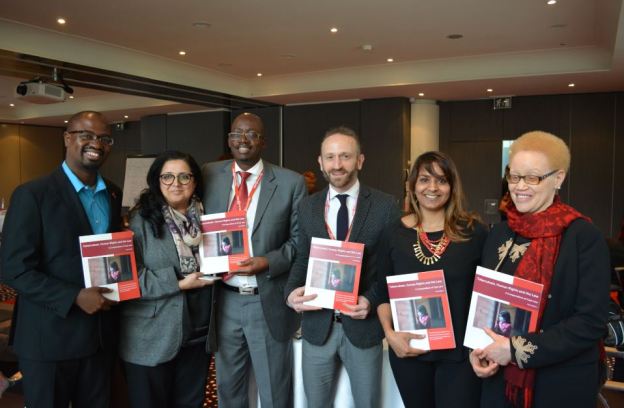
TB, Human Rights and the Law: “Tell it like it is”

GroupStop TB Partnership’s workshop on TB and human rights this week fired up a diverse group with plans for action. The meeting brought lawyers and community activists together with UN agencies and donors to brainstorm ways to use the law and community empowerment to mobilize faster action on TB.
Continue reading

Models meet reality? TB meets HIV

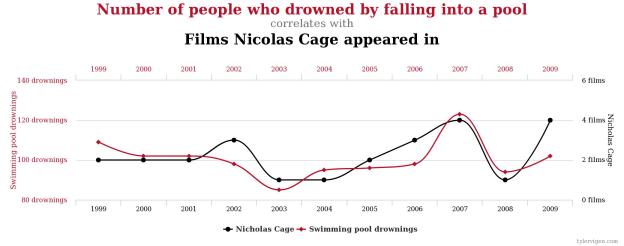
spuriouscorr_pool_cage

A recent letter to the Lancet argues that mathematical modelling on cost-effectiveness of tuberculosis control efforts fail to account for real-world challenges: “Political determinants such as … political disruptions, migration, poverty…which are at the root of existing tuberculosis and emerging anti-tuberculosis drug resistance in the world.”

Continue reading

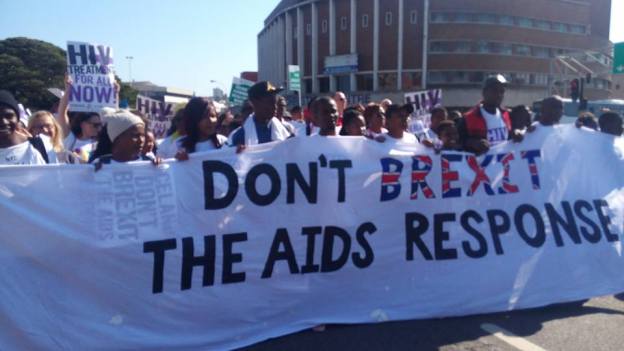
Don’t Brexit the AIDS response: The world we come home to from Durban

13729054_10154305587862278_3370400505541526623_n

The banners are rolled up, the Durban Convention Center floors are swept and the 18,000 delegates to the International AIDS Conference have all gone home. For many, the euphoric week of hugs, protests and panels blew by too fast. As global funding shrinks, there won’t be many more of these massive meetings. That makes it all the more critical to step up investment in and support for civil society now, as the engine that has driven funding, research, science and innovation in the AIDS response. Two recent reports I wrote explore both innovations and the challenges in actually getting the funds to communities.

The first was a report for African Men for Sexual Health and Rights (AMSHeR) on key populations’ engagement with global health financing. I worked at the Global Fund in 2013-15, during roll-out of the “new funding model”, and pushed for space for communities to advocate at the country level as an integral part of that model. So the job of assessing key populations’ satisfication with that experience felt a little like my old Human Rights Watch colleague Marc Garlasco, who did high-value targeting in Iraq for the Pentagon before he went to the war zones for HRW to document civilian casualties caused by the bombs. (Though I hoped that the Global Fund’s “new funding model” had been less damaging than the Iraq invasion.)

Continue reading

What counts in the new UNAIDS strategy

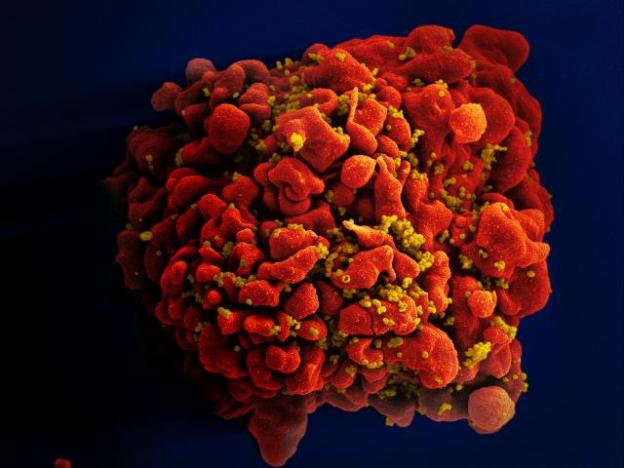
HIV-infected T Cell

HIV-infected T Cell

UNAIDS has posted its new draft strategy online. There’s good news for human rights advocates: human rights and gender equality are front and center. The challenge: human rights will still be measured and reported on separately from mainstream health indicators.

While that means the issues may get more visibility, it also keeps human rights out of the system of routine reporting that national AIDS programs do. Instead, UNAIDS, WHO and other global health agencies should integrate law and policy analysis into the disease impact models on which the strategy is based. Here’s why.

Continue reading