Category Archives: Aid accountability

TB, Human Rights and the Law: “Tell it like it is”

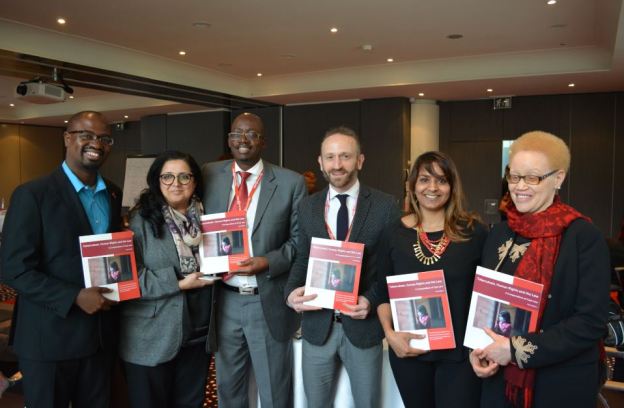
GroupStop TB Partnership’s workshop on TB and human rights this week fired up a diverse group with plans for action. The meeting brought lawyers and community activists together with UN agencies and donors to brainstorm ways to use the law and community empowerment to mobilize faster action on TB.
Continue reading

Global Fund KPIs: Accountability and the hall of mirrors

img_0591About two weeks ago, the Global Fund Observer, a newsletter that reports on the Global Fund to Fight AIDS, TB and Malaria, published an article about the Fund’s Key Performance Indicators (KPIs). The article raised concerns about the process of developing the KPIs, citing a letter written by the 10 country and NGO constituencies on the Global Fund Board that implement grants (the “Implementers Group”) to the chairs of the committee that are developing KPI targets.

Continue reading

In 2017, set global health targets from the ground up

grand-anse-beach-040117I’m lucky to be starting 2017 in Grenada, a flawlessly beautiful island nation of just 100,000 people. But Grenada, like many countries, has found it hard to gather basic HIV data in a context where same-sex sexuality and sex work are illegal.

You can circle the whole country in a jeep in one sunny afternoon, as a friend and I did last week, and be greeted warmly everywhere. One local friend says that if he gets a flat tire, at least three people he knows will stop to help. But in part because the country is so close-knit and stigma is deep, many people living with HIV remain hidden, unreached and uncounted.

Continue reading

Diversity, strength and inclusive health governance: Implementers on the Global Fund Board

implementerwebpage-2

The Global Fund to Fight AIDS, TB and Malaria has a uniquely democratic and inclusive model of governance. Half of its Board is made up of 10 constituencies representing 123 countries that receive health financing from the Global Fund, as well as civil society organizations, and networks of communities living with HIV and affected by TB and malaria. Last week, it was my honor to join the Implementers Group of the Board to co-facilitate their annual retreat in Nairobi, Kenya.

Continue reading

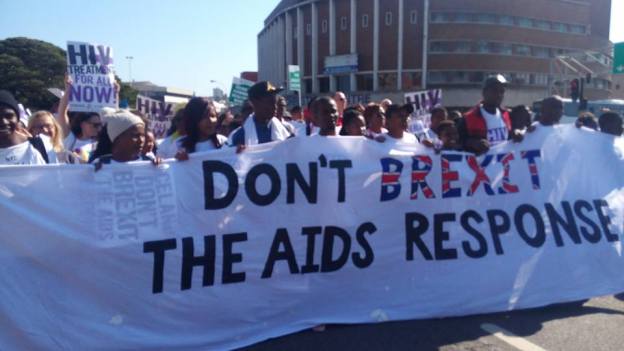
Don’t Brexit the AIDS response: The world we come home to from Durban

13729054_10154305587862278_3370400505541526623_n

The banners are rolled up, the Durban Convention Center floors are swept and the 18,000 delegates to the International AIDS Conference have all gone home. For many, the euphoric week of hugs, protests and panels blew by too fast. As global funding shrinks, there won’t be many more of these massive meetings. That makes it all the more critical to step up investment in and support for civil society now, as the engine that has driven funding, research, science and innovation in the AIDS response. Two recent reports I wrote explore both innovations and the challenges in actually getting the funds to communities.

The first was a report for African Men for Sexual Health and Rights (AMSHeR) on key populations’ engagement with global health financing. I worked at the Global Fund in 2013-15, during roll-out of the “new funding model”, and pushed for space for communities to advocate at the country level as an integral part of that model. So the job of assessing key populations’ satisfication with that experience felt a little like my old Human Rights Watch colleague Marc Garlasco, who did high-value targeting in Iraq for the Pentagon before he went to the war zones for HRW to document civilian casualties caused by the bombs. (Though I hoped that the Global Fund’s “new funding model” had been less damaging than the Iraq invasion.)

Continue reading

Who Pays to Fulfill Health Rights? Aid Eligibility, Accountability and Fiscal Space

Reposted from Health and Human Rights Journal 

Dollarnote_hqNow that members of the UN have adopted the ambitious Sustainable Development Goals (SDGs), the next question is: how to pay for it all? The answers raise questions about aid eligibility, transparency and accountability.  Continue reading

Getting human rights into global health indicators

From the Health and Human Rights journal special issue on evidence of the impact of human rights on health:

In response to new scientific developments, UNAIDS, WHO, and global health financing institutions have joined together to promote a “fast-track” global scale-up of testing and treatment programs, setting ambitious targets with the goal of ending the three diseases by 2030. However, these indicators only nominally reference the catastrophic impact that human rights abuses have on access to health services; they also do not measure the positive impact provided by law reform, legal aid, and other health-related human rights programs. To ensure that these biomedical programs have impact, UN agencies and health financing mechanisms must begin to more systematically and proactively integrate human rights policy and practice into their modeling and measurement tools.

See the full article here

Human rights, corruption and action for aid agencies

IMG_20150929_194424

These remarks were delivered as part of a panel, “Those we impact”, at the Conference of International Investigators, Montreux, Switzerland, September 30, 2015.

I understand that many of the fraud and corruption investigators here today are former police officers. Human rights activists like me usually go out of our way to avoid talking to the police, let alone answering your questions. But I was asked to address human rights as it relates to corruption in development aid, and over the past few days, I’ve had the opportunity to hear many investigators here describe the same challenges that human rights advocates share. In fact there’s a lot of overlap between corruption and human rights abuses, and in what some agencies are doing to address both.
Continue reading

UNAIDS human rights indicators: What counts?

“Annie Lennox SING campaign, Vienna 2010 b” by Manfred Werner – Tsui – Own work. Licensed under CC BY-SA 3.0 via Wikimedia Commons

Take a trip back to the fabulous summer of 2010, when thousands of activists marched at the International AIDS Conference, waved our beer steins in Stephansplatz to the sweet songs of Annie Lennox, and demanded Human Rights and HIV/AIDS, Now More Than Ever. That year, UNAIDS added ambitious human rights targets to its 2011-15 “Getting to Zero” strategy.

Now fast forward to 2015. The UNAIDS-Lancet Commission has once again called for ambitious human rights action to help bring an end to AIDS by 2030. As UNAIDS and The Global Fund craft new strategies for the next four years, it seems like a good time to ask – how are we doing?

Continue reading