Author Archives: Meg Davis, Ph.D.

“First they threw Molotov cocktails”: Closing space for LGBT groups

Storm_at_Sea,_Willem_van_de_Velde_the_Younger_(1633-1707)_-_IMG_7352.JPG
When you’ve done human rights work for a few years, you think you’re all old and jaded and can no longer be shocked, but it’s not true.

I got reminded of this last month when interviewing Sanjar Kurmanov from lesbian, gay, bisexual and transgender (LGBT) group Labrys, based in Bishkek, Kyrgyzstan. I reached Sanjar while writing a report for Global Philanthropy Project on how government crackdowns on civil society affect LGBT groups (the report launched yesterday and is online here). Continue reading
More maps for health rights activists

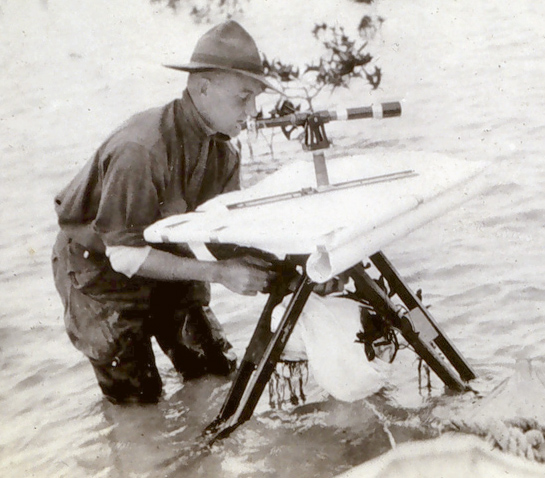
Noaa_theb1713_1A few months ago I wrote a quick overview of some maps of laws that affect the HIV response. I promised then that I’d post an update if more maps came to light. The launch of the new Sustainable Development Goals seems to be sparking a lot of new maps and indicators, so this may become a regular topic.

For now, here’s three new (or rather, new-to-me) maps on health and human rights. Continue reading

Anti-capitalism in… Geneva?

IMG_20151220_010751Conservative Geneva turns out to be livelier in the middle of the night than it is at 10 am. The Swiss city is so famously quiet there’s a Facebook meme comparing the weekend here to life after the apocalypse. But a walk home from factory-turned-club l’Usine early Sunday morning led past the after-effects of a protest on Rue de Coutance: “Burn the banks”  spray-painted on the bank branches, “Free drugs” on the pharmacy, an Anarchist A on Starbucks and a “Yiihaa” whoop on Manor, one of the city’s two staid department stores.

Continue reading

Human Rights Day: Action on Rights of People who Use Drugs

From the Graduate Institute Global Health Programme newsletter

December 10 is Human Rights Day, marking the UN General Assembly’s adoption of the Universal Declaration of Human Rights (UDHR) in 1948. This year, Decmeber 10 saw a flurry of activity around the right to health, including a major new statement on the rights of people who use drugs. The UN Special Rapporteur on the Right to Health, Dainius Puras, published a powerful open letter to the head of the UN Office on Drugs and Crime (UNODC). The letter received widespread media attention. Continue reading

Getting human rights into global health indicators

From the Health and Human Rights journal special issue on evidence of the impact of human rights on health:

In response to new scientific developments, UNAIDS, WHO, and global health financing institutions have joined together to promote a “fast-track” global scale-up of testing and treatment programs, setting ambitious targets with the goal of ending the three diseases by 2030. However, these indicators only nominally reference the catastrophic impact that human rights abuses have on access to health services; they also do not measure the positive impact provided by law reform, legal aid, and other health-related human rights programs. To ensure that these biomedical programs have impact, UN agencies and health financing mechanisms must begin to more systematically and proactively integrate human rights policy and practice into their modeling and measurement tools.

See the full article here

A map of maps for AIDS activists

KartographWondering which countries have which kinds of laws and policies affecting HIV and key populations? You can find out on these maps.

Basic HIV data: On this site, UNAIDS reports on the data it collects from countries on their progress on global HIV indicators.

The map shows country-by-country coverage of HIV services for sex workers, men who have sex with men, and people who inject drugs, for example. This is searchable, easy to use, with data presented in both maps and tables. If you’re not sure what the shorthand used to describe the indicators really means, the indicators are defined in detail in this guide.
Continue reading

Human rights, corruption and action for aid agencies

IMG_20150929_194424

These remarks were delivered as part of a panel, “Those we impact”, at the Conference of International Investigators, Montreux, Switzerland, September 30, 2015.

I understand that many of the fraud and corruption investigators here today are former police officers. Human rights activists like me usually go out of our way to avoid talking to the police, let alone answering your questions. But I was asked to address human rights as it relates to corruption in development aid, and over the past few days, I’ve had the opportunity to hear many investigators here describe the same challenges that human rights advocates share. In fact there’s a lot of overlap between corruption and human rights abuses, and in what some agencies are doing to address both.
Continue reading

What counts in the new UNAIDS strategy

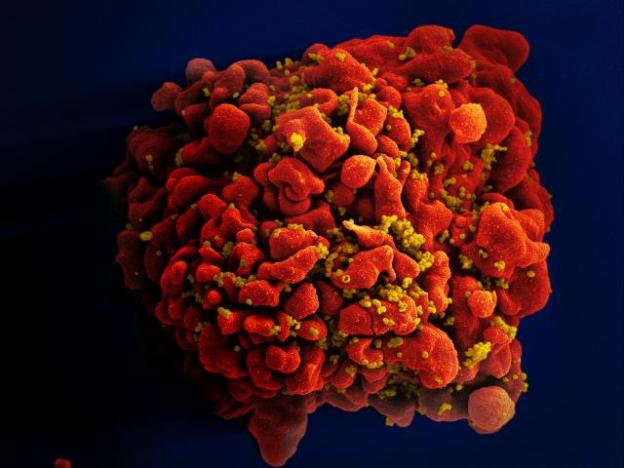
HIV-infected T Cell

HIV-infected T Cell

UNAIDS has posted its new draft strategy online. There’s good news for human rights advocates: human rights and gender equality are front and center. The challenge: human rights will still be measured and reported on separately from mainstream health indicators.

While that means the issues may get more visibility, it also keeps human rights out of the system of routine reporting that national AIDS programs do. Instead, UNAIDS, WHO and other global health agencies should integrate law and policy analysis into the disease impact models on which the strategy is based. Here’s why.

Continue reading

Monkey on a Mission

674px-Squirrel_monkeyFor the past few years, I’ve been monkeying around with an adventure story for kids. It’s now finished and online as a serial, with a new chapter each week.

Monkey on a Mission is loosely based on the Chinese classic, Journey to the West. In ancient China, a misbehaving monkey just can’t stop getting into trouble. When Monkey gets into the biggest trouble in the history of the universe, the Jade Emperor, who lives in the sky, orders Monkey to find the Buddha and bring back a copy of his famous book.  The only problem: the Buddha lives far away, across the Silk Road, in India.

To find the Buddha, the little monkey must cross rivers, deserts and mountains, and fight giant demons. Luckily he has three friends to help him finish the mission: a teenager, a pig, and a wise monk.

Continue reading