The World Health Assembly (WHA)’s recent decision to extend the Global Strategy on Digital Health 2020-2025 until 2027, and to launch efforts to plan the next Global Strategy on Digital Health, marked an important commitment to improving health for all by accelerating the development and governance of digital health.
However, our new research report – one of the most extensive qualitative studies on this topic – finds that some of the young people who most need to be reached with digital health solutions in low- and middle-income countries (LMIC) are left behind, and face risks of misinformation, online abuse and discrimination. WHO and member states must use these findings to inform their work on governance, planning and prioritisation, or risk driving deeper health inequities and harms for those digital health most needs to reach.
On 20 January 2025, the U.S. administration issued an Executive Order freezing all foreign assistance funds for 90 days, including funds distributed by the US President’s Emergency Fund for AIDS Relief (PEPFAR). The following months saw sweeping cuts, reversals, and mass firings (USAID’s staff were cut from 10,000 personnel to 15), and a series of lawsuits and appeals (see KFF’s helpful timeline for more on this). Researchers and advocates began immediately to document the impact and forecast future scenarios. This narrative review summarizes reports and analysis that I could find to date (August 2025).
This week marks the 75th anniversary of the Universal Declaration of Human Rights (UDHR) — rights that were created at a very different time, long before artificial intelligence (AI) and technology transformed our lives. To meet the needs of a digital future and shape the next 75 years of human rights, the public needs a say in defining the global tech agenda. This will require digital literacy and empowerment and for research to move from small-scale one-off projects to transnational strategies that help build a global grassroots movement.
In Ghana, Kenya and Vietnam, we found many young adults used web platforms (such as Google), social media platforms (such as Facebook, Instagram, TikTok, Twitter and YouTube), and social chat (such as WhatsApp, Zalo) to get health information, advice and peer support on sexual and reproductive health, HIV and Covid-19. The platforms brought clear benefits to young people, but also risks of censorship, abuse, stalking and other harms. These issues were largely not addressed by national laws and policies, and by global digital health policies such as the World Health Organization (WHO)’s Global Strategy on Digital Health 2020-2025.
The research was conducted using mixed qualitative methods and a transnational participatory action research approach in which communities of people living with HIV, as well as national civil society groups and human rights lawyers in Ghana, Kenya and Vietnam, participated in design of the study, data-gathering, analysis, and validation of the final results and recommendations. Our policy recommendations are outlined in a policy brief in English and Spanish.
We raised these concerns in an open letter to the director-general of WHO, Dr. Tedros, calling on WHO and other global health agencies to take action to protect young people from risks of harm when they seek health information online.
The study in Ghana, Kenya and Vietnam concludes the first phase of a multi-country study. The study continues in Bangladesh and Colombia, conducted in collaboration with social scientists at BRAC University and Universidad de los Andes, as well as civil society groups in both countries. The two universities also published their working paper based on desk review of laws and policies governing digital health in both countries, Digital Health and Rights in Bangladesh and Colombia.
We discussed the findings with researchers, social media influencers, health NGOs and an expert on sexual and reproductive health from WHO in a webinar, and the slides are below:
Keynote address to Thematic session of 49th UNAIDS Programme Coordinating Board, 10 December 2021
Thank you moderator, and also for the important work your team and UNAIDS does to strengthen data in the HIV response. It’s an honor to be asked by civil society and communities to join this important discussion on Human Rights Day.
I’d like to take this moment to reflect on the big picture. The hard truth is that funding for HIV is diminishing, and we urgently need data to make hard decisions. Who lives, who dies, increasingly depends on data.
But health data is not neutral: it is shaped by power and inequalities.
The study assessed the experience of sex workers, men who have sex with men, people who use drugs and transgender people in Africa with consultations for the Global Fund, UNAIDS and PEPFAR. An online survey had 99 respondents from 25 African countries, and I spoke with key populations representatives in Cameroon, Kenya, Malawi, Nigeria, Uganda, and Tanzania, as well as a focus group in Malawi. The report was cosponsored and co-authored by AMSHeR, the Africa Sex Workers Alliance, Gender DynamiX, and Transbantu Association Zambia.
42 percent of key populations who responded had been consulted on national HIV strategic plans, 33 percent on Global Fund funding requests, and 19 percent on PEPFAR operational plans
Many complained that consultation was cursory and tokenistic, and few had seen the final plans or budgets to verify whether their input was included
Participation was complex, time-consuming, and unfunded — it often involved taking time off from day jobs, or travel at the respondent’s own expense
Some described retaliation or threats from key actors in their countries if they criticized performance of existing programmes
Despite the challenges, most expressed determination to continue to engage, in order to press for meaningful change.
As we think about future development of mechanisms to manage funds for the Covid-19 response, what works and what does not, it’s important to hear and reflect on these voices. The report includes recommendations, which the report partners discussed in depth with the Global Fund, UNAIDS and PEPFAR at the time.
More broadly, perhaps we should think about a community HIV archive to save reports like these from vanishing…
Data is increasingly important in planning and decision-making, but data can also be biased and shaped by our assumptions and gaps in knowledge. When this gap-filled data is plugged into algorithms, it can amplify existing forms of discrimination.
For example, the global HIV response is being undermined by the fact that many governments deny the existence of the key populations at greatest risk — gay men and other men who have sex with men, sex workers, drug users, and transgender people. Since no data is gathered about their needs, life-saving services are not funded, and the lack of data reinforces the denial. This creates a data paradox which can warp national health priorities and plans.
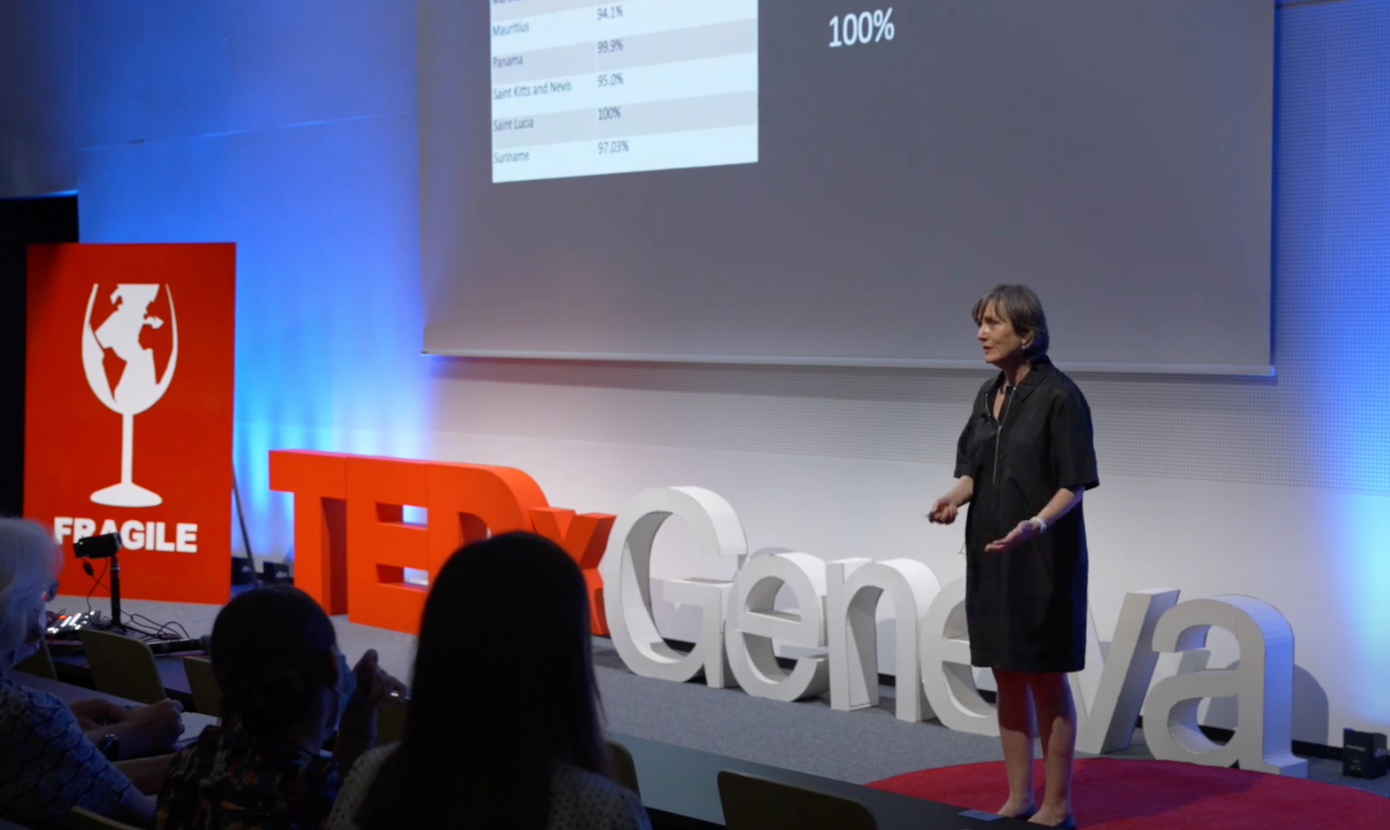
As this Tedx talk explains, stigma, discrimination and inequality are systematically creating invisibility which can keep marginalized, stigmatized groups uncounted and unserved. To break the vicious cycle of this data paradox, we have to change the power relationships that keep some groups hidden and on the margins.
The politics that shape data creation and utilisation hold the power to construct visibility in global health. This visibility through data – or lack thereof – not only influences what programmes and populations receive support, but ultimately plays a role in shaping who lives and who dies. This is the message at the heart of The Uncounted, which interrogates how quantitative evidence is developed and implemented in global health. Following from an initial article written under the same title three years ago, Sara Davis examines the global fight against HIV/AIDS to both acknowledge the necessity of data in global health and thoughtfully critique how data are gathered, transformed, and operationalised. The resulting book – intended for both scholars and practitioners – finds new meaning against the backdrop of the COVID-19 pandemic, which has underlined the limitations of data utilization in public health policy.
Click here to order your hardcover, paperback or e-book copy of The Uncounted: Politics of data in global health, for 20% off using code DAVIS20 at checkout.
Scholars have recently critiqued human rights as a purely Eurocentric construct that has failed to find wider appeal and is now on the decline. Some cite the apparent success of China’s repressive political regime in support of this argument, but depicting China as uniformly authoritarian risks missing the persistence of domestic forms of human rights advocacy and mobilization.
This chapter, “The Persistence of Chinese Rights Defenders”, which I wrote a couple of years ago for the Oxford Handbook of Law and Anthropology, draws on my experience as a rights advocate to review the history of civil society mobilization in China since 2000, including actions taken in domestic courts, in non-governmental organizations, and through social media. Despite repeated crackdowns, the arrest and disappearance of leading human rights defenders, and Chinese authorities’ interference with UN human rights mechanisms, some Chinese human rights defenders do find innovative ways to persist in rights-based advocacy, such as the practice of weiguan (public counterveillance during political trials).
I argue that the world has entered a more intense phase of struggle over the meaning and application of human rights norms in diverse local contexts, and that the human rights framework facilitates transnational solidarity.
It was a pleasure to co-edit this special section of the Health and Human Rights Journal with Carmel Williams on “Big Data, Technology, Artificial Intelligence and the Right to Health”. It gathers a diverse group of anthropologists, human rights lawyers, tech researchers, rights activists, and UN policy officials to explore early thinking on this rapidly emerging field.
As Carmel and I wrote in our editorial, COVID-19 has forced many of us into a strange new intimacy with our phones and laptops: those of us in the elite with the privilege to work from home have virtually melded with our machines. Personally, I don’t think I’ve been farther than one room’s length from my smartphone since March 2020. So if we are now basically cyborgs…living “on the boundary between fact and fiction” (Haraway 1995), what use are 20th century human rights?
A bunch of smart people tackled this and other questions, ranging from the rights of children in the digital age, to the role of tech in human rights investigations, to the role of the private sector and UN agencies, to the possibilities for new forms of civil society and community engagement in the digital space. The issue is available for free download here.




 Sara (Meg) Davis