
Category Archives: Human rights impact

A democracy deficit in digital health?

PERCo_CL15_biometric_controllerFrom Health and Human Rights, January 16, 2020

By Sara L. M. Davis, Kenechukwu Esom, Rico Gustav, Allan Maleche, and Mike Podmore

In 1994, when Health and Human Rights was launched by editor Jonathan Mann, it appeared-in print-in a very different world: one in which the internet had just been created, and could only be accessed through dial-up telephone lines paid for by the minute; cell phones were heavy, clunky, and unaffordable for most. Our thinking about health and human rights, formed before the digital age, must now advance to keep pace with its new risks and opportunities. Continue reading
Detention of Cheng Yuan: Background & update

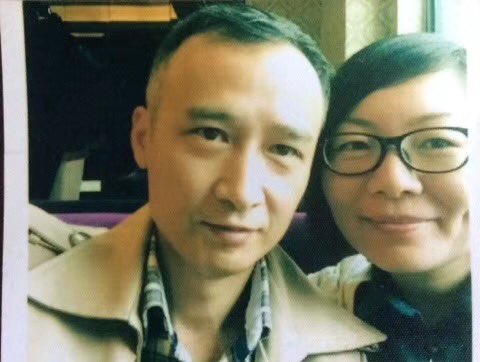
SML and CY

Cheng Yuan and Shi Minglei

No response yet from China or UNAIDS to the letter signed by 200 individuals and organizations nearly 3 weeks ago about Chinese anti-discrimination activist Cheng Yuan and his two colleagues, the Changsha Three.

Here’s an overview to his impressive career and an update on retaliation against his wife and brother, who have raised public concerns about his detention. I’ve met Cheng Yuan in China, and know him personally as a quiet, sober civil rights activist; not someone who goes to international meetings or works with international organizations much, just a local rights lawyer who put his head down, tirelessly filing case after case on behalf of China’s most marginalized people. [A huge thank you to fellow volunteers Gisa Dang, Lu Jun, and Yang Zhanqing, who contributed research and links.] Continue reading

Hundreds sign letter to call on China to free Changsha 3

Red_ribbonOver 200 individuals and organizations signed an urgent appeal letter calling on China to release the Changsha Three: Cheng Yuan, Liu Yongze, and Xiao Wu of Chinese organization Changsha Funeng. The final letter with signatures is here: Changsha Three Open Letter 30 July 2019
The Chinese translation is here (中文版): 联名信中文版 Continue reading

End HIV discrimination: Free the Changsha Three

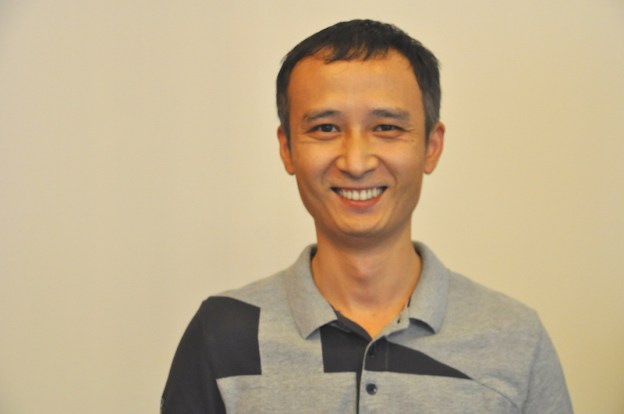
On July 22nd, after he visited Hong Kong for personal and organizational business, Chinese state security detained health rights advocate Cheng Yuan (photo right) and his two colleagues from NGO Changsha Funeng, Liu Yongze (photo left) and Xiao Wu. Cheng Yuan’s wife, Shi Minglei, has nothing to do with his NGO, but she was also detained and interrogated, and placed under residential surveillance under suspicion of subverting state power.

An open letter calling on China to release the Changsha Three is online here

Continue reading

The Uncounted: Video interview

Screen Shot 2019-07-10 at 6.50.48 PMIn 2017 I was honored to be one of three recipients of the International Geneva Award from the Swiss Network for International Studies (SNIS). Here’s a 4-minute video interview about that work, now transmogrifying into part of my forthcoming book, The Uncounted: Politics of Data in Global Health. Many thanks to Ruxandra Stoicescu and the SNIS team.

The Global Fund, Governance and Public Health

globalhealthwebinar_0Last month I got to join this great online webinar, “The Global Fund, Governance and Public Health”, with AIDS-activist-turned-prof Matt Kavanagh (Georgetown University’s O’Neill Institute) and Dr. Eric Goosby (UCSF, currently UN Special Envoy on TB and former head of the US President’s Emergency Plan for AIDS Relief, or PEPFAR), moderated by Philip Landrigan (Boston College).

Matt shared his recent study on the impact of the Global Fund on good governance in countries, Dr. Goosby and I shared comments, and we had a rich, focused discussion with some good audience questions. In hindsight, I only wish that I had spoken slower 🙂

Listen to the recording, and see the slides, here.


Democratizing Data conference

mod4_landscape_2I’m really looking forward to this one: Democratizing Data: Grassroots strategies to advance human rights will meet at New York University School of Law on April 17-18, 2019. Registration is free and open to the public.

It’s a promising motley convening of activists, scholars, scientists and lawyers. I’ll be joining the 3pm panel on April 17, “Can we democratize data?” As the organizers write, “Despite datafication’s dark side, a movement is brewing at the grassroots. When data is demystified, deconstructed, and placed in the hands of affected communities it can be used to empower and fight injustice. Exerting control over processes of definition, computation, and machine learning, communities are turning the data gaze on those in power.”

I’m reliably told that facial recognition software will not used at the event 😉 Join us!


Six tips for officials on working with civil society

group of people having a meeting

This is a stock photo of people having a meeting. Photo by rawpixel.com on Pexels.com

I recently met a young human rights lawyer who is starting a government job, and who asked for advice on working with civil society. Her question made me realize that while there are many tools for capacity-building for activists on how to advocate with officials, I’ve never run across a capacity-building program for officials on how to work with civil society.

Continue reading

Event: Human rights transformations

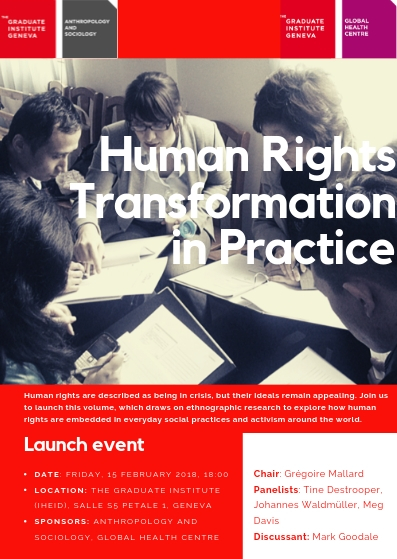
HR Transformation Feb 15 2019Human rights are described as being in crisis, but the ideals thrive in many places, even where they’re under attack. Join us for this upcoming event to launch a volume, Human Rights Transformation in Practice, edited by Sally Engle Merry and Tine Destrooper. The book draws on diverse ethnographic research to explore how human rights are put into practice by activists and institutions around the world.

I co-wrote a chapter with Charmain Mohamed on Asia Catalyst‘s work with Chinese activists advocating on HIV and human rights. (I founded Asia Catalyst, and Charmain was executive director for a time; Karyn Kaplan is the ED today.) My fellow panelists at this event, Johannes Waldmuller and Tine Destrooper, write about environmental activism in Ecuador, and UNICEF’s work in DRC, respectively. Grégoire Mallard will chair the session, with Mark Goodale sharing insights as discussant.

Date: Friday, 15 February from 18:00 to 20:00

Place: Graduate Institute (IHEID), room S5, petale 1, Geneva, Switzerland

Sponsors: Anthropology and Sociology Department, Global Health Centre


AIDS 2018: New technologies, new data, new risks

IMG_4693

Sex workers protest to demand their rights at AIDS 2018

The third in a series of four articles on AIDS 2018 for the Health and Human Rights journal. 

*

July 24, 2018

Data has been a hot topic throughout the first two days of AIDS 2018—who has it, how to get it, and what kinds of data can speed progress to the end of AIDS. But while new technologies are generating real excitement among donors and researchers, human rights activists are rarely in these discussions, leaving questions of risk and ethics largely in the shadows.

Some new methods that are rapidly on the rise include:

  • Geospatial mapping, which uses individual data to map key population hotspots and patterns of migration
  • Biometrics, the collection of physical markers such as iris scans, fingerprints, or facial scans that can identify individuals, and
  • Phylogenetics, the use of molecular sequencing data, such as DNA, to trace historical relationships among people and chart the transmission of viruses.

These are some examples of data use presented in the first two days: we have heard about the use of biometrics to track sex workers and long distance truckers in African transportation corridors; a Mumbai project that mapped sites around the city of men who have sex with men using Grindr, a gay dating app; use of HIV genotyping and phylogenetics to assess transmission of resistance.

Read more