Category Archives: Civil society

African Commission launches HIV and human rights report

IMG_2458
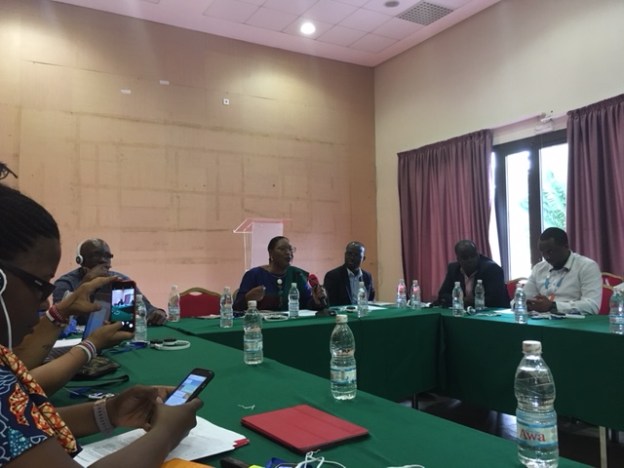
In a side meeting at the recent ICASA conference in Abidjan, the African Commission on Human and Peoples’ Rights launched its report, HIV, the Law and Human Rights in the African Human Rights System: Key Challenges and Opportunities for Rights-Based Responses. An early version of the report is online here. (to be updated when the final is posted online.)

Led by Commissioner Soyata Maiga, chairperson of the African Commission, the process brought together African human rights experts, civil society groups, and UN and other legal experts to review the extent to which African human rights systems address HIV-related human rights violations.  Continue reading

Gay men’s networking zone vandalized at ICASA 2017

Activists describe “closing civic space” at African AIDS meeting – but also energy and inspiration to continue the fight

2017-12-09-PHOTO-00003876

Civil society protest at Saturday plenary, ICASA 2017. Photo: Allan Maleche

A networking zone for men who have sex with men (MSM) at the African regional AIDS conference was vandalized Thursday night, with posters torn down and boxes stolen. The International Conference on AIDS and STIs in Africa (ICASA) met in Abidjan, Côte d’Ivoire from 4-9 December 2017. Despite numerous logistical problems and what some activists called “shrinking civic space”, civil society presence was strong and energetic throughout.

“We packed everything together neatly and covered it with a banner the night before,” in the MSM networking zone, said Delane Kalembo of African Men for Sexual Health and Rights (AMSHeR), which coordinated the zone. “When we arrived at eight the next morning, the stand that we used had been pulled out, material we had posted had been ripped off, two boxes of materials were stolen, and chairs were all over the show. It looks like our booth was targeted.” The vandalism was one of several incidents raised by civil society groups, who described “closing space” for communities at ICASA.

Continue reading

In 2017, set global health targets from the ground up

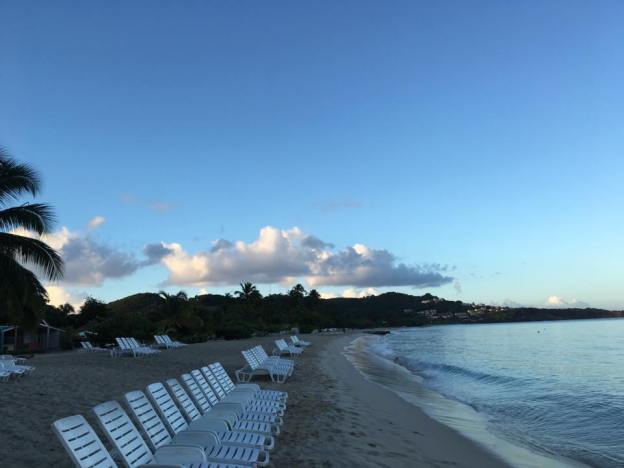
grand-anse-beach-040117I’m lucky to be starting 2017 in Grenada, a flawlessly beautiful island nation of just 100,000 people. But Grenada, like many countries, has found it hard to gather basic HIV data in a context where same-sex sexuality and sex work are illegal.
You can circle the whole country in a jeep in one sunny afternoon, as a friend and I did last week, and be greeted warmly everywhere. One local friend says that if he gets a flat tire, at least three people he knows will stop to help. But in part because the country is so close-knit and stigma is deep, many people living with HIV remain hidden, unreached and uncounted.

Continue reading

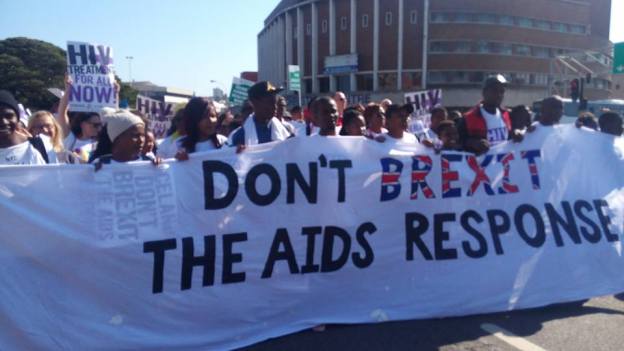
Don’t Brexit the AIDS response: The world we come home to from Durban

13729054_10154305587862278_3370400505541526623_n

The banners are rolled up, the Durban Convention Center floors are swept and the 18,000 delegates to the International AIDS Conference have all gone home. For many, the euphoric week of hugs, protests and panels blew by too fast. As global funding shrinks, there won’t be many more of these massive meetings. That makes it all the more critical to step up investment in and support for civil society now, as the engine that has driven funding, research, science and innovation in the AIDS response. Two recent reports I wrote explore both innovations and the challenges in actually getting the funds to communities.

The first was a report for African Men for Sexual Health and Rights (AMSHeR) on key populations’ engagement with global health financing. I worked at the Global Fund in 2013-15, during roll-out of the “new funding model”, and pushed for space for communities to advocate at the country level as an integral part of that model. So the job of assessing key populations’ satisfication with that experience felt a little like my old Human Rights Watch colleague Marc Garlasco, who did high-value targeting in Iraq for the Pentagon before he went to the war zones for HRW to document civilian casualties caused by the bombs. (Though I hoped that the Global Fund’s “new funding model” had been less damaging than the Iraq invasion.)

Continue reading

“First they threw Molotov cocktails”: Closing space for LGBT groups

Storm_at_Sea,_Willem_van_de_Velde_the_Younger_(1633-1707)_-_IMG_7352.JPG
When you’ve done human rights work for a few years, you think you’re all old and jaded and can no longer be shocked, but it’s not true.

I got reminded of this last month when interviewing Sanjar Kurmanov from lesbian, gay, bisexual and transgender (LGBT) group Labrys, based in Bishkek, Kyrgyzstan. I reached Sanjar while writing a report for Global Philanthropy Project on how government crackdowns on civil society affect LGBT groups (the report launched yesterday and is online here). Continue reading