

 Last week, the Bernstein Institute at New York University held a powerful meeting of activists and thinkers about data, algorithms and resistance. We met in the classically elegant Vanderbilt Hall, under the watchful gaze of the portraits of past NYU presidents, but the emphasis was squarely on activism: how communities can resist top-down algorithmic control, and reclaim a space for democratic decision-making.
Some speakers had reports that were starkly Orwellian. Big Brother is here already, but in many countries, he’s specifically just watching people of color, trans and queer people, migrants and poor people – through predictive policing and other algorithmic forms of control and domination. For some affected communities, democratizing data is already a matter of survival.

 I’m really looking forward to this one:


 In 2016, UN member states committed to two goals as part of the big global push to end AIDS: Ensure that 30% of all HIV service delivery is community-led, and ensure that 6% of HIV resources are allocated to advocacy, community mobilization, and other “social enablers”. But a
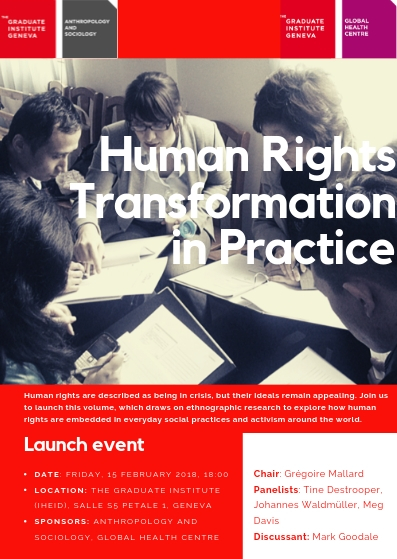 Human rights are described as being in crisis, but the ideals thrive in many places, even where they’re under attack. Join us for this upcoming event to launch a volume,




 Sara (Meg) Davis