Category Archives: Civil society

Hundreds sign letter to call on China to free Changsha 3

Red_ribbonOver 200 individuals and organizations signed an urgent appeal letter calling on China to release the Changsha Three: Cheng Yuan, Liu Yongze, and Xiao Wu of Chinese organization Changsha Funeng. The final letter with signatures is here: Changsha Three Open Letter 30 July 2019

The Chinese translation is here (中文版): 联名信中文版 Continue reading

End HIV discrimination: Free the Changsha Three

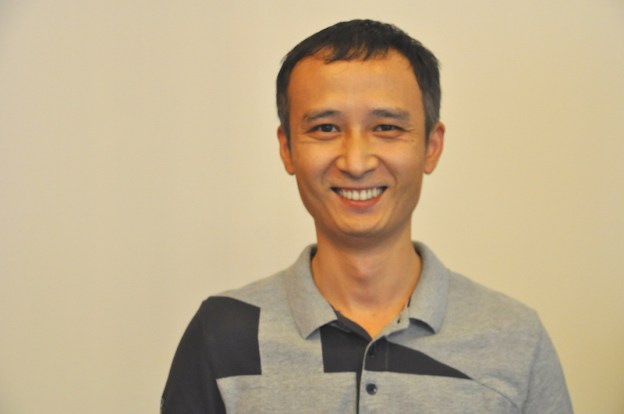
On July 22nd, after he visited Hong Kong for personal and organizational business, Chinese state security detained health rights advocate Cheng Yuan (photo right) and his two colleagues from NGO Changsha Funeng, Liu Yongze (photo left) and Xiao Wu. Cheng Yuan’s wife, Shi Minglei, has nothing to do with his NGO, but she was also detained and interrogated, and placed under residential surveillance under suspicion of subverting state power.

An open letter calling on China to release the Changsha Three is online here

Continue reading

The Global Fund, Governance and Public Health

globalhealthwebinar_0Last month I got to join this great online webinar, “The Global Fund, Governance and Public Health”, with AIDS-activist-turned-prof Matt Kavanagh (Georgetown University’s O’Neill Institute) and Dr. Eric Goosby (UCSF, currently UN Special Envoy on TB and former head of the US President’s Emergency Plan for AIDS Relief, or PEPFAR), moderated by Philip Landrigan (Boston College).

Matt shared his recent study on the impact of the Global Fund on good governance in countries, Dr. Goosby and I shared comments, and we had a rich, focused discussion with some good audience questions. In hindsight, I only wish that I had spoken slower 🙂

Listen to the recording, and see the slides, here.


Democratizing Data conference

mod4_landscape_2I’m really looking forward to this one: Democratizing Data: Grassroots strategies to advance human rights will meet at New York University School of Law on April 17-18, 2019. Registration is free and open to the public.

It’s a promising motley convening of activists, scholars, scientists and lawyers. I’ll be joining the 3pm panel on April 17, “Can we democratize data?” As the organizers write, “Despite datafication’s dark side, a movement is brewing at the grassroots. When data is demystified, deconstructed, and placed in the hands of affected communities it can be used to empower and fight injustice. Exerting control over processes of definition, computation, and machine learning, communities are turning the data gaze on those in power.”

I’m reliably told that facial recognition software will not used at the event 😉 Join us!


Six tips for officials on working with civil society

group of people having a meeting

This is a stock photo of people having a meeting. Photo by rawpixel.com on Pexels.com

I recently met a young human rights lawyer who is starting a government job, and who asked for advice on working with civil society. Her question made me realize that while there are many tools for capacity-building for activists on how to advocate with officials, I’ve never run across a capacity-building program for officials on how to work with civil society.

Continue reading

Health, rights and drugs

voeux2019_2

Première Ligne, Geneva’s government-funded safe injection site

Ninety-nine percent of people who inject drugs live in countries that lack adequate harm reduction services, including the three countries with the largest populations of people who inject drugs: China, Russia, and the United States. That is one of the key findings of a new UNAIDS report to which I contributed, Health, rights and drugs: Harm reduction, decriminalization and zero discrimination for people who use drugsThe report also shows that rates of HIV infection are not declining among people who use drugs, and may be on the rise. It calls for urgent action. Continue reading

Data, priorities and global health

img_5683

I spent part of January working on my book manuscript, The Uncounted: Politics of Data in Global Health. When I began writing this in 2017, I was just interested in the data paradox: in which criminalized, stigmatized key populations, who lack data to prove they exist, get no funding for programs that save their lives, reinforcing the lack of data. But as I get deeper into the work, I’m noticing the growing dominance of cost-effectiveness language and tools, and how economic values are shaping how we think about priorities in global health finance.

Continue reading

AIDS 2018: Award to Allan Maleche, a “tireless crusader”

IMG_4652

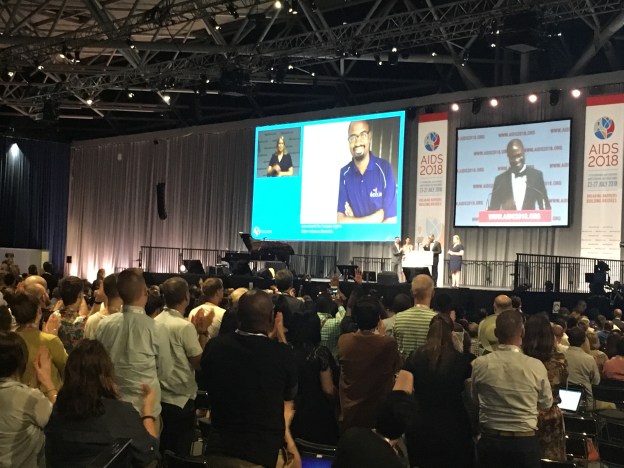
Standing ovation for Allan Maleche, winner of the Elizabeth Taylor Human Rights Award.

The second of a series of four articles for Health and Human Rights on the 2018 International AIDS Conference

*

July 23, 2018

AIDS 2018 is honoring human rights advocates and acknowledging their work is becoming ever more challenging in many countries. At the opening ceremony, the Elizabeth Taylor award went to Kenyan rights advocate Allan Maleche, executive director of KELIN. He won the award for KELIN’s successful litigation for the rights of people living with HIV and TB in Kenya.

In accepting the award, Maleche said, “There are many days when the challenges we face in Kenya and globally can seem endless. Human rights are never really secure—they must be fought for every day. Even with the advancements in science in the HIV world, the stigma and human rights violations remain the same.”

He said the award would be a huge boost to his organization to continue their work serving affected communities in Kenya.

“The story of HIV is a story of social justice and human rights,” said Quinn Tivey, grandson of Dame Elizabeth Taylor who took up AIDS activism in the 1980s, founding organizations and foundations in outrage over the treatment of her friends and colleagues. International AIDS Society (IAS) president Linda-Gail Bekker called Maleche a “tireless crusader” for the rights of people living with HIV and affected by TB, noting that KELIN had “used the law as a powerful tool.”

Maleche affirmed the cause of 23 women who have written to UNAIDS about sexual harassment, saying, “I believe them and I stand in solidarity with them. We look to the UN to set the standard on human rights and gender equality. We are not there yet.” Maleche also leads the Developing Country NGO Delegation to the Global Fund Board.


“Everyone Said No”: Key Populations and Biometrics in Kenya

Using_Data_to_Track_Health_in_Kenya_(36813866360)

CDC researchers working in Kenya

From the Harvard Health and Human Rights journal:

By Sara L.M. Davis and Allan Maleche


Hands off our fingerprints! That was the message from Kenyan civil society activists who blocked the use of biometric data, such as fingerprints or iris scans, in a government HIV study.

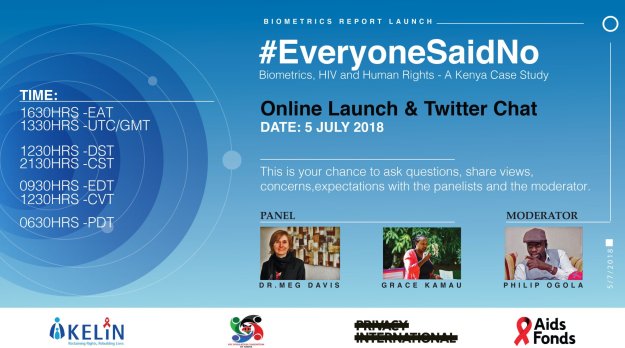
This case study of rights advocacy is the subject of a report, Everyone Said No: Biometrics, HIV and Human Rights, a Kenya Case Study, published by KELIN and the Kenya Key Populations Consortium.“Key populations” in HIV are defined by WHO as sex workers, men who have sex with men, transgender people, people who inject drugs, and people in prison or other closed settings. The case study was written by the authors of this blog and researchers at KELIN and the Key Populations Consortium. It provides an overview of the HIV epidemic and data gaps on key populations in Kenya, an analysis of the legal and human rights issues in use of biometrics in HIV research, and documentation of the advocacy by key populations groups in Kenya. It also makes recommendations to global health donors, Kenyan authorities, and civil society groups who face similar debates in other countries.

The purpose of the government HIV study was to fill critical gaps in data on key populations in Kenya, to enable better targeting of resources. The government research team aimed to use biometric data to manage the risk of double-counting, given that key populations tend to be highly mobile. As soon as Kenyan key population groups learned about the plan to use biometrics, they became vocal in their opposition, citing concerns about criminalization. In Kenya, sex work, drug use, and same-sex sexual behavior are all criminalized. Through persistent advocacy, they successfully blocked any use of biometrics in the study. It will proceed using other methods.

Read the full blog. 

We will launch the report with a Twitter chat at 15:30 CET (16:30 EAT) Thursday 5 July – join the conversation with @KELINKenya.
EveryoneSaidNo-Poster


Impact of closing civic space on HIV in East Africa

Restrictions on registration, financing, and operations of civil society organizations go beyond reasonable limits recognized in human rights law and create a chilling climate for organizations working on HIV response in Ethiopia, Kenya and Uganda. That’s the finding of a new report by the International Center for Not-for-Profit Law (ICNL). I was proud to be part of the international writing team for the report, with lawyers and advocates from all three countries and from UNAIDS.

Continue reading